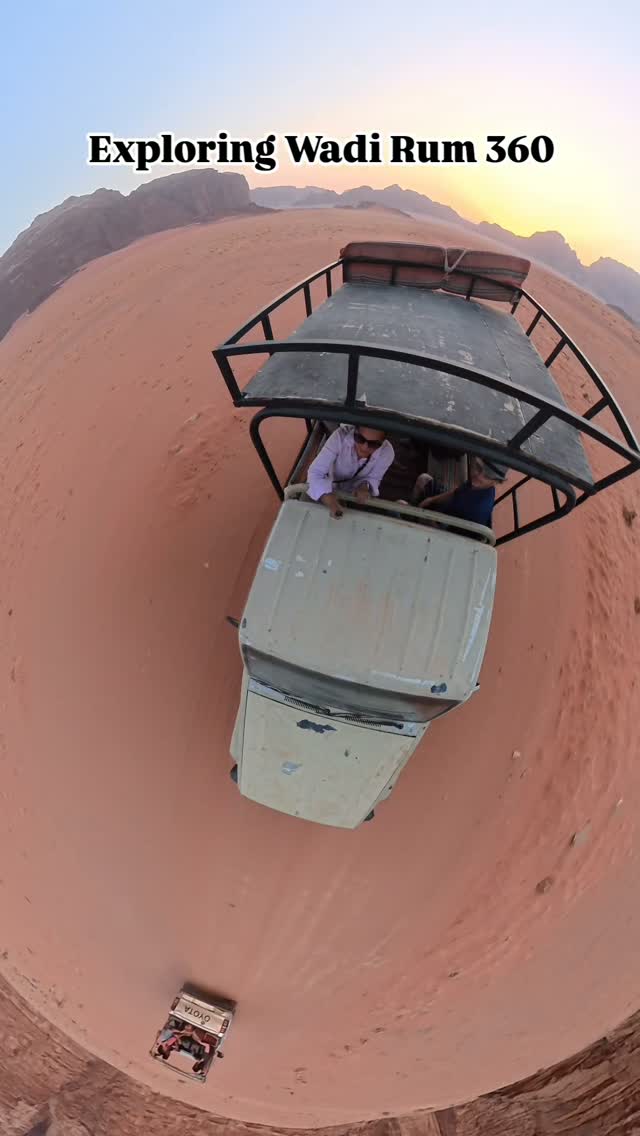
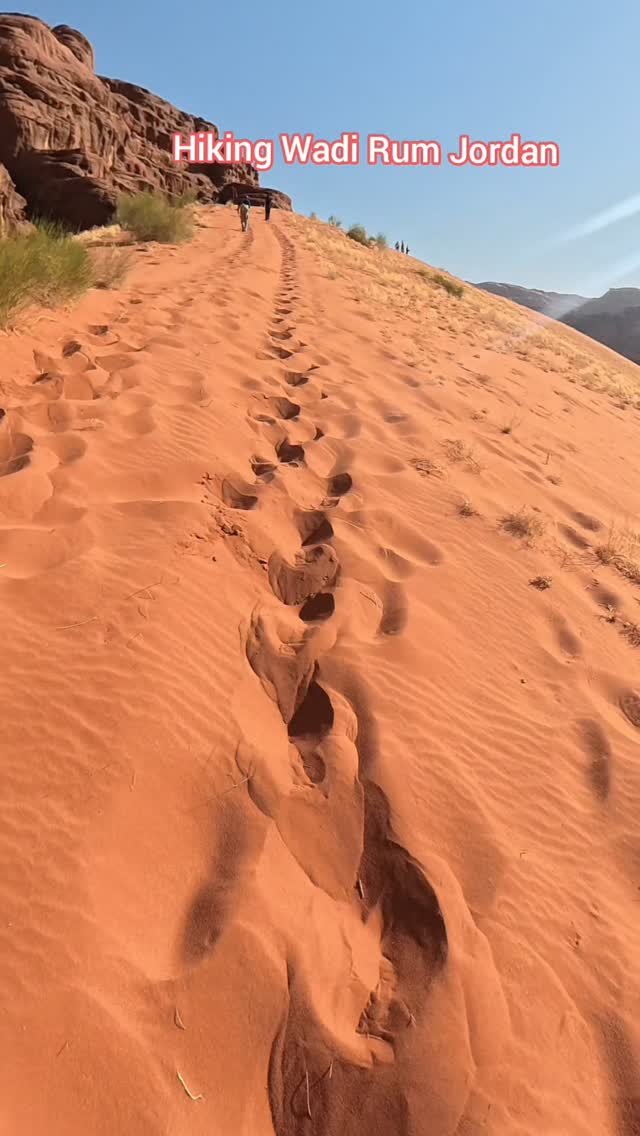
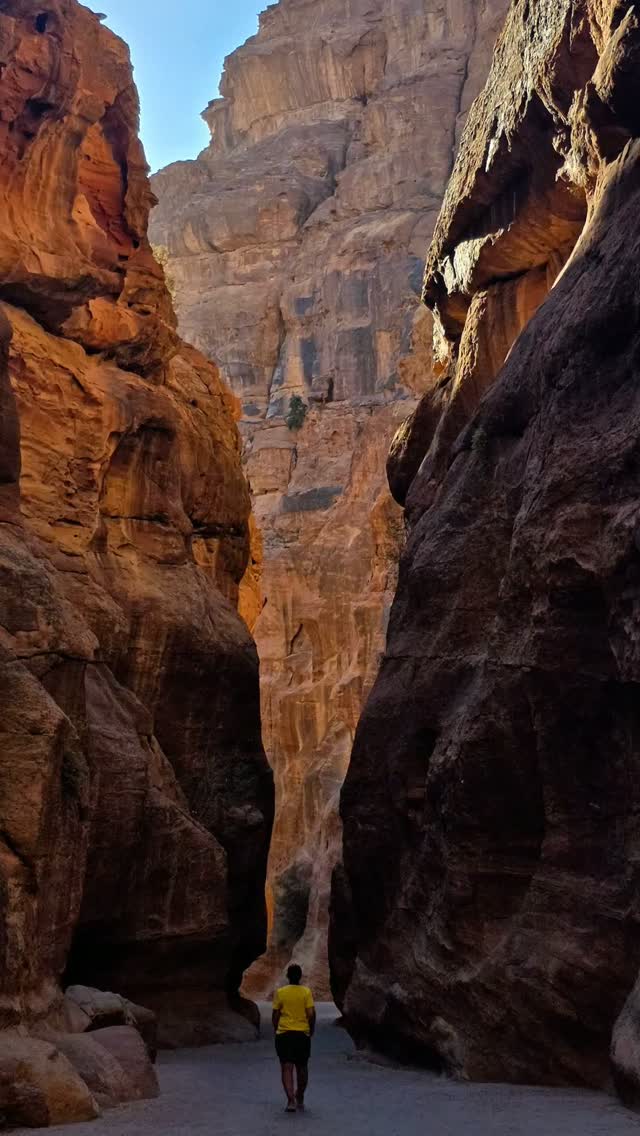
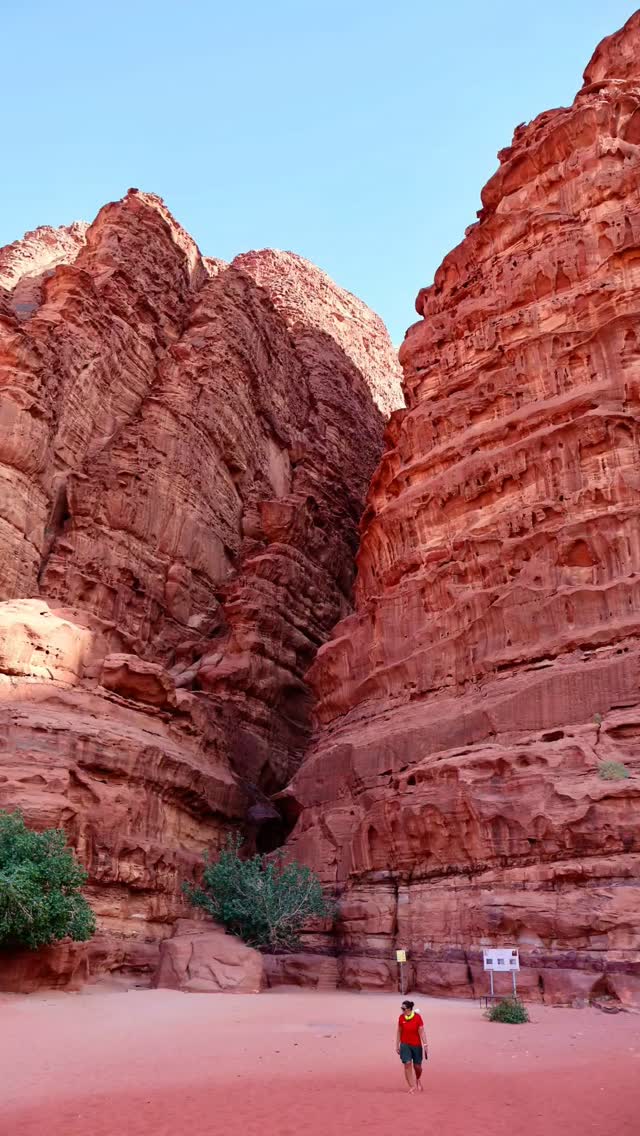
It is the summer of 2026. Geopolitics in the Middle East are… not exactly at their best, in the middle of the Iran-US war. However, it is still possible to travel to Jordan, so I decided to ignore any reasonable fear and just go. Once there, it was easy to see that life was pretty much business as usual, and I felt safe the entire time. The only noticeable difference was the lack of mass tourism. Not a bad thing at all as a tourist, but definitely not the best situation for the local people who depend on it.


Just to set the scene, because for me travel memories are not only about the destination. Many times, they are also about that particular moment in your life, the circumstances and the special stories around it — and I believe this trip will always be one of those. The uncertainty before going was very real: monitoring my flight status every day, flight cancellations on my way back, following the latest developments and becoming almost a geopolitics expert in the process. 😉

Yes, traveling educates you in many different ways. That said… let’s get to business!
What is Petra famous for?
Petra is an ancient city in southern Jordan, built more than 2,000 years ago and famous for its spectacular buildings carved directly into the rose-colored sandstone cliffs. Once the thriving capital of the Nabataean Kingdom, it became an important trading hub connecting Arabia with the Mediterranean world

Today, Petra is a UNESCO World Heritage Site and one of Jordan’s most iconic places — although nothing really prepares you for seeing it in person.

Petra: lost and rediscovered
Petra was at its peak around 2,000 years ago, when it was a wealthy and important trading city. Things gradually started to change after the Romans took control of the Nabataean Kingdom in AD 106.

Exactly why Petra eventually declined as a major city is not completely clear. Rather than one single event, it was probably a combination of changing trade routes, earthquakes and the gradual loss of its economic importance over several centuries.


After this long decline, Petra was largely forgotten by the outside world, although local Bedouin communities continued to know and live in the area. In 1812, Swiss explorer Johann Ludwig Burckhardt reached Petra, bringing the ancient city back to the attention of the Western world.

Much later, as Petra became a major archaeological and tourist site, many of the Bedouin families who had been living in its caves were relocated to a village nearby. However, as I learned during my visit, some families still live within the wider Petra area today, away from the main tourist routes.
How I visited Petra
I visited Petra as part of an Intrepid Travel tour, and I really liked the way the visit was organized. We had a guided introduction through the Siq and up to the Treasury, continuing until the area where some of the main trails begin. After that, we had around a day and a half of free time to explore on our own. For me, this was a great balance: enough time with a local guide to understand the history and what we were seeing, but plenty of freedom afterwards to choose our own trails, stop for photos and explore at our own pace.

Our hotel was only about a 10-minute walk from the entrance, which was very convenient. But Petra is huge, and once you are inside, distances quickly add up. Sometimes the challenge is not deciding how far you want to go, but remembering that you still have to walk all the way back! 😅
The Treasury
The Treasury, or Al-Khazneh, is Petra’s most famous monument and the image most people associate with the ancient city. Carved directly into the sandstone cliff and standing almost 40 meters high, it appears dramatically at the end of the narrow Siq.

Despite its name, it was most likely built as a royal tomb rather than a treasury. And while it is certainly Petra’s most iconic sight, it is far from the only highlight — the site is enormous, with hundreds of tombs, temples and other structures carved into the surrounding mountains.

One of the hiking trails takes you high above the Treasury to this incredible viewpoint. It took us around two and a half hours to hike there and back to the trail start, so it definitely required some effort — but seeing the Treasury from a completely different perspective made it absolutely worth it!

Fun fact: there is another, lower viewpoint of the Treasury, but you have to pay to access it. The locals will happily try to convince you that it is the best view, and it is certainly popular for Instagram photos. 😉 But if you are willing to do the more difficult hike, the view from above is fantastic — and free!


A well-deserved rest after a good hike, with a premium view!
The Monastery
Reaching the Monastery (Ad Deir) was one of the most exciting — and tiring — parts of visiting Petra. Getting there means climbing around 800–900 steps through the mountains, which is quite a workout if, like me, you decide to do it on your own instead of taking a donkey.

But the reward is worth it: the Monastery is one of Petra’s largest and most impressive monuments, carved directly into the rock and standing almost 50 meters high (so yes, bigger than the Monastery). Despite its name, it was originally a Nabataean monument, probably used for ceremonial or religious purposes, and only became known as the Monastery much later.

My color coding didn’t work very well that day because I am barely visible! 😉 But that tiny white/beige human standing there is me. It does give you a good idea of the scale and just how massive this monument really is!

The walk up to the Monastery is part of the experience itself. As you climb the hundreds of steps, the landscape becomes more open and you start getting beautiful views over Petra’s dry, rocky mountains and valleys. The higher you go, the more you can really feel the altitude and appreciate the scale of the landscape around you.


And of course, donkeys and horses are part of the scenery too! Seeing them going up and down the narrow paths certainly gives some perspective… although I was very happy to do the climb on my own two feet. 😉
The Royal Tombs
The Treasury and Monastery may get most of the attention, but the Royal Tombs area was another part of Petra that I really enjoyed exploring.

This group of huge tombs is carved directly into the side of the mountain, with impressive façades that dominate the landscape around them.

I honestly don’t remember which tomb was which — the Urn, Silk, Corinthian or Palace Tomb — but as an area, it was incredibly impressive.

Walking right next to these massive structures gives you another perspective of the scale of Petra and just how much was carved directly into the mountains. Definitely much more than just the Treasury!

Another massive façade carved directly into the mountain… Petra just keeps going!

The scale is even more impressive when you stand right next to them

Walking through the siq!
Walking through the Siq was actually one of the highlights of Petra for me. This narrow canyon twists between huge sandstone walls, sometimes more than 80 meters high and only a few meters apart.


The colors, shapes and changing light make the walk beautiful on its own, but of course you also know what is waiting at the end


Now a picture without a little Nat spoiling the view 😉

The moment when you finally start seeing a small part of the Treasury through the narrow opening between the cliffs is simply unforgettable!

Conclusion: seeing canyons from above is very impressive, but having the chance to actually walk through them is a particularly rewarding experience.
The colors inside Petra
One of the most unexpected highlights for me was simply entering some of the caves and tombs while walking around Petra. From the outside, many look quite simple, but inside the sandstone reveals incredible natural patterns and layers of red, pink, orange, yellow and even purple.

The colors and shapes have been created naturally over millions of years, and every cave seems to look a little different. It was something I was not expecting before visiting Petra, and definitely one of the details that made the place even more special.

And now, just the colors! No monument, no particular view and almost no human for scale — just the incredible natural patterns inside Petra’s sandstone. Every little section seems to have its own combination of colors and shapes, and honestly, some of them look more like paintings than rock.


Instagram momments in Petra
Background story: by the second day, I was apparently the only one brave — or crazy — enough to stay inside Petra during the hottest part of the day. 😉 It was seriously hot and the distances are huge, but with so many incredible backgrounds everywhere, I could easily picture myself setting up my tripod and getting some nice Nataly-pictures while I had the chance.

There is also something quite funny about taking pictures in Petra. Some of the local people know exactly where the best photo spots are and are more than happy to take your phone and suddenly turn you into a professional Instagrammer!

They tell you where to stand, how to pose and which angle works best… whether you asked for the full photoshoot experience or not. 😉

Between that and having my own tripod, I ended up with quite a collection. Colorful caves, huge monuments, desert landscapes… Petra certainly doesn’t have a shortage of backgrounds. And yes, some of the results were actually pretty nice, so they deserve their own little section!


Exploring Petra on foot
Petra is huge, so spending two days there is very common, especially if you want to explore beyond the main sights. There are many different hiking trails, and doing all of them would easily take several days. I explored the Main Trail, the trail up to the Monastery, the Royal Tombs and the Al-Khubtha Trail, which takes you high above Petra to one of the best viewpoints of the Treasury.

There are options if you prefer to walk less, including horses, donkeys and the small Club Cars that operate on some sections. For me, however, walking and hiking was a big part of the experience. It gave me the freedom to stop whenever I wanted, explore little corners, take as many photos as I wanted and simply enjoy the exercise — even in the lovely 40°C heat! 😅

And yes.. it was worth it!
Petra was everything I expected it to be, but also much more. I knew about the Treasury and the Monastery, but I was not expecting the colorful caves, the incredible hiking trails, the scale of the whole site or simply how much I would enjoy exploring it on my own.
And after all the uncertainty before the trip, monitoring flights and wondering until almost the last minute if I would actually make it to Jordan… I am very glad I did. Sometimes the trips that require a little more effort — and perhaps a little bit of craziness 😉 — become some of the best memories.
Petra was definitely one of them